Rosa Marina vs Orzo: Tiny Pasta Cousins Compared
This site may contain links to affiliate websites, and we receive an affiliate commission for any purchases made by you on the affiliate website using such links.

Including a Delicious Orzo Salad Recipe
Have you ever wondered about the difference between Rosa Marina vs Orzo? I know I have! These tiny pasta shapes can be confusing to tell apart, but they each have their unique qualities.
Rosa marina is a small, grain-shaped pasta that resembles tiny rice grains. It’s popular in soups and salads, adding a delightful texture. Rosa marina is slightly smaller and more rounded than orzo, with a softer texture when cooked.
Orzo, on the other hand, is shaped like a large grain of rice or barley. It’s versatile and often used in Mediterranean and Middle Eastern cuisine. I love using orzo in pasta salads or as a side dish. Its slightly chewy texture holds up well in various recipes.
Understanding Rosa Marina and Orzo
Rosa marina and orzo are pasta varieties that are often confused due to their similar appearance. I’ll explore their unique characteristics, origins, and cultural significance.
What Is Rosa Marina?
Rosa marina is a tiny, grain-shaped pasta. I find its name quite poetic, translating to “marine rose” in Italian. It’s slightly smaller than Orzo and has a more rounded shape.
Rosa marina is commonly used in soups, salads, and side dishes. It absorbs flavors well, making it perfect for broth-based recipes.
This pasta type is less common outside of Italy. When I cook with rosa marina, I appreciate its delicate texture and its ability to not overpower other ingredients.

What Is Orzo?
Orzo, meaning “barley” in Italian, is a rice-shaped pasta. It’s larger than Rosa Marina and has a more elongated form.
I often use orzo in Mediterranean and Middle Eastern cuisines. It’s versatile, working well in soups, salads, and as a rice substitute.
When cooked al dente, orzo has a firm texture. It holds up well in cold dishes and reheats nicely. Its popularity has grown globally, making it easier to find in most grocery stores.
Historical Origins and Cultural Significance
Rosa marina and orzo have deep roots in Italian culinary tradition. Their small sizes reflect resourcefulness during times when wheat was scarce.
I’ve learned that Orzo’s history dates back to ancient civilizations. It was likely invented to mimic rice in regions where rice was unavailable or expensive.
Although Rosa marina is less common, it has maintained a stronger connection to specific Italian regional cuisines. I’ve noticed it’s particularly popular in southern Italy.
Both kinds of pasta have evolved beyond their Italian origins. I’ve seen orzo embraced in Greek cuisine, while rosa marina remains a cherished ingredient in traditional Italian soups.
Comparative Analysis
Rosa marina and orzo are often mistaken for each other but have distinct characteristics that set them apart. I’ll explore their unique attributes, culinary applications, and nutritional profiles.
Texture and Shape Differences
Rosa Marina and Orzo may look similar initially, but I’ve noticed some key differences. Rosa marina is typically smaller and rounder, resembling tiny grains of rice. Its texture is slightly smoother, and it cooks up to be quite tender.
Orzo, on the other hand, is a bit larger and more elongated. Its shape reminds me of a grain of rice, but it is larger. When cooked, orzo maintains a slightly firmer texture compared to rosa marina.
I’ve found that these differences in shape and texture can impact how each pasta behaves in various dishes.
Culinary Uses and Recipes
I’ve used Rosa Marina and Orzo in my cooking, and they shine differently. Rosa marina is excellent in soups, absorbing flavors well without becoming mushy. I love adding it to my minestrone or chicken noodle soup for a delightful texture.
With its larger size, Orzo works wonderfully in pasta salads and as a side dish. I often use it as a substitute for rice in stuffed peppers or tomatoes. It’s also great in one-pot meals, like my favorite lemon chicken orzo skillet.
Here’s a quick comparison of popular uses:
- Rosa Marina:
- Soups
- Light broths
- Cold salads
- Orzo:
- Pasta salads
- Pilaf-style dishes
- Casseroles

Nutritional Values and Health Benefits
Regarding nutrition, I’ve found that rosa marina and orzo are similar, as they’re both made from durum wheat semolina. Here’s a breakdown of their nutritional content per 100g (uncooked):
| Nutrient | Rosa Marina | Orzo |
|---|---|---|
| Calories | 371 | 357 |
| Protein | 13g | 12g |
| Carbs | 75g | 73g |
| Fiber | 3g | 3g |
Both are good sources of complex carbohydrates, providing sustained energy. They also contain some protein and fiber, which can help with satiety.
I’ve noticed that whole wheat versions of both pasta types are available, offering more fiber and nutrients. These can be a great option for those looking to increase their whole grain intake.
Orzo Salad Recipe
Prep time: 10 minutes
Cook time: According to package instructions of the orzo
Servings: 4-6
Ingredients
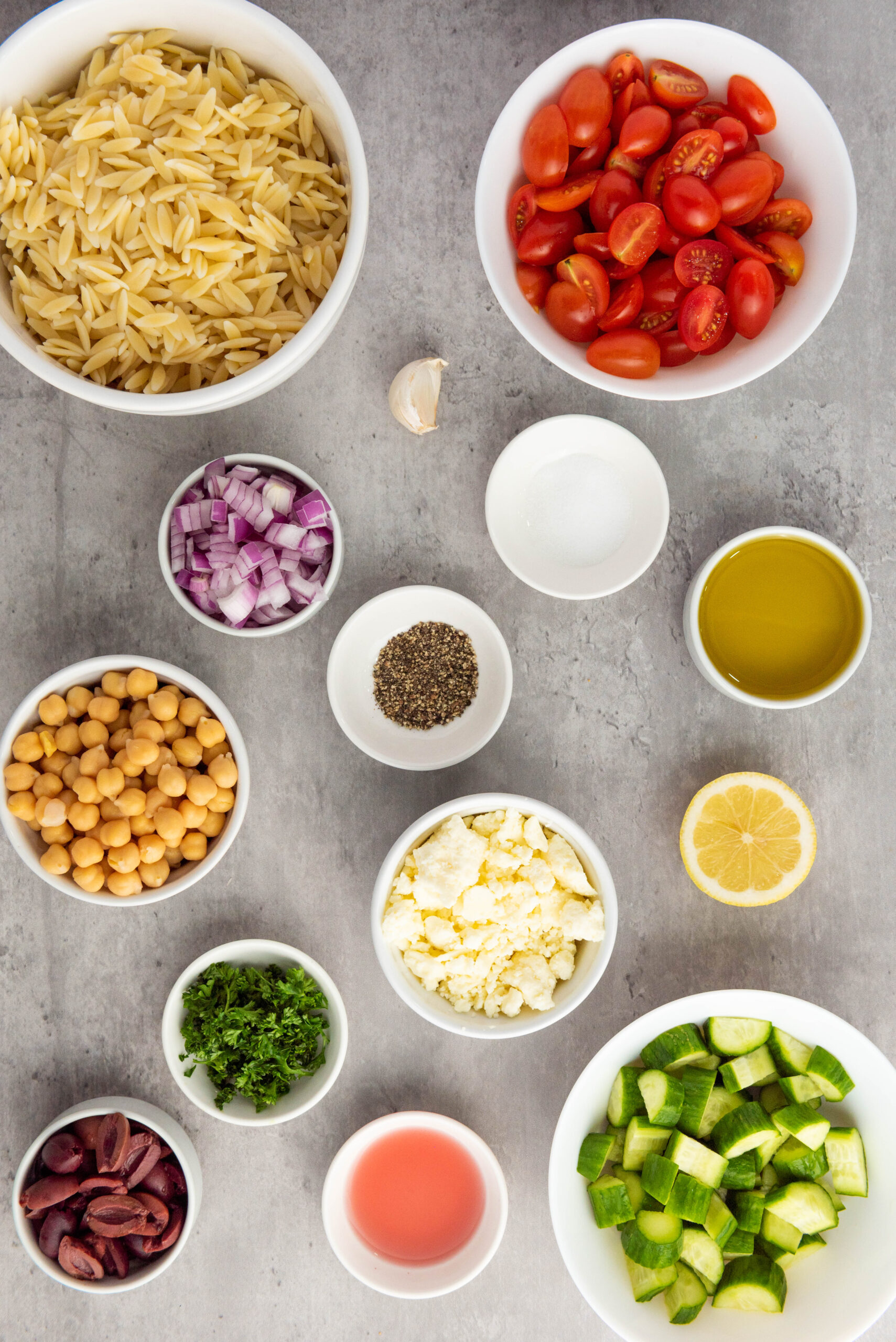
- 1 ½ cups dry orzo pasta
- 2 cups cherry tomatoes, halved
- 3 Persian cucumbers, diced (mini cucumbers)
- ½ red onion, finely chopped
- ½ cup kalamata olives, pitted and sliced
- 6 oz feta cheese, crumbled
- ¼ cup fresh parsley, chopped
- ¼ cup extra virgin olive oil
- 2 tablespoons red wine vinegar
- 1 lemon, juiced
- 1 garlic clove, minced
- Salt and pepper, to taste
Instructions
- Cook the orzo pasta according to package instructions until al dente. Rinse under cold water and drain well.
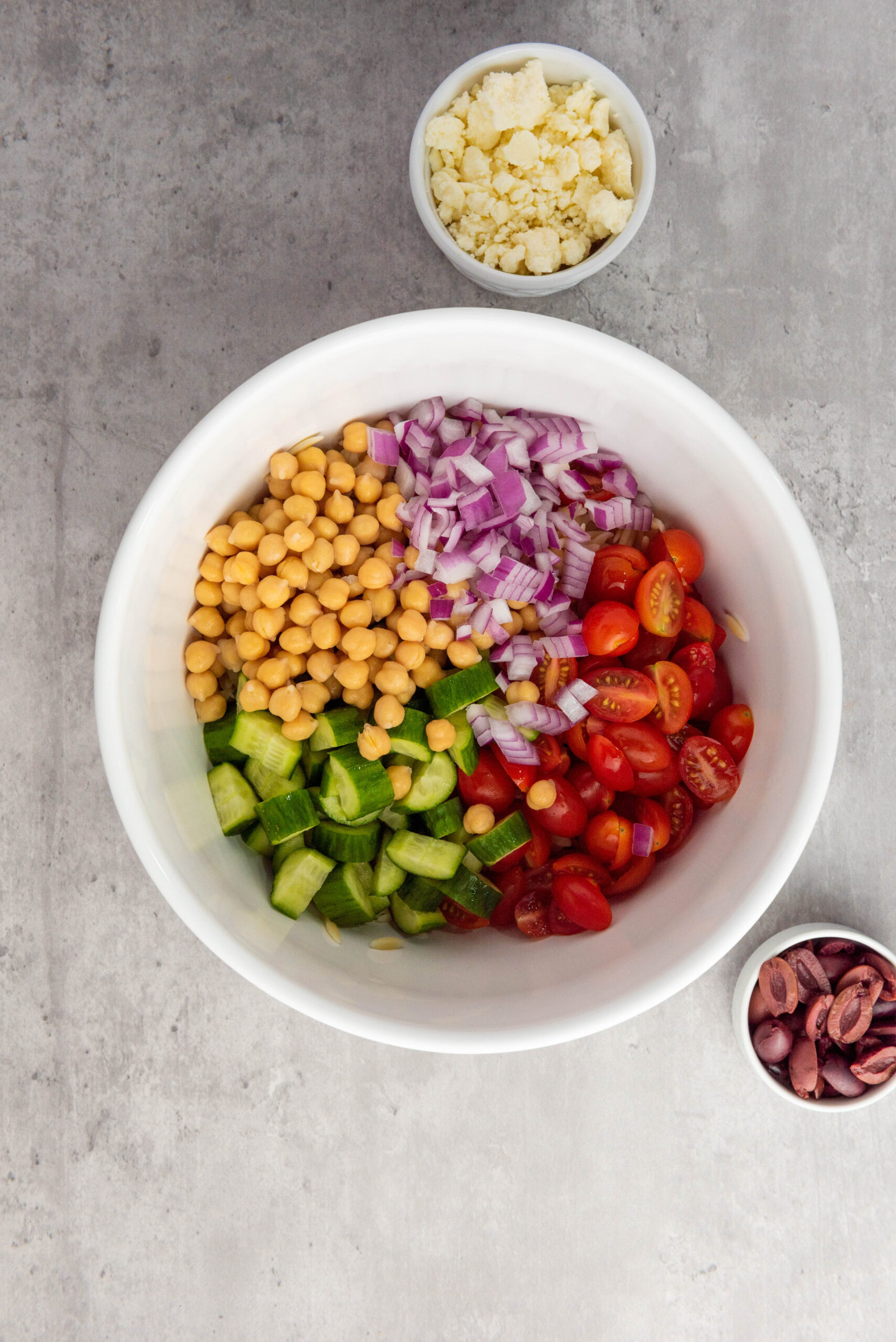
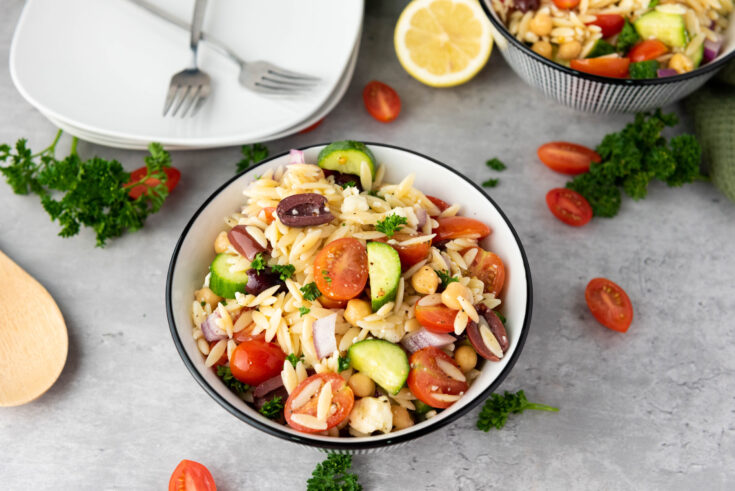
- Combine the cooked orzo with cherry tomatoes, diced Persian cucumbers, red onion, kalamata olives, and crumbled feta cheese in a large bowl.
- Add the chopped parsley to the bowl.
- To create the dressing, whisk together the olive oil, red wine vinegar, lemon juice, minced garlic, salt, and pepper in a small bowl.
- Pour the dressing over the salad and toss gently to combine all the ingredients well.
- Adjust the seasoning if necessary, adding more salt, pepper, or lemon juice to your taste.
- Chill the salad in the refrigerator for at least 30 minutes before serving to allow the flavors to meld together.
Orzo Salad Recipe
Ingredients
- 1 ½ cups dry orzo pasta
- 2 cups cherry tomatoes, halved
- 3 Persian cucumbers, diced (mini cucumbers)
- ½ red onion, finely chopped
- ½ cup kalamata olives, pitted and sliced
- 6 oz feta cheese, crumbled
- ¼ cup fresh parsley, chopped
- ¼ cup extra virgin olive oil
- 2 tablespoons red wine vinegar
- 1 lemon, juiced
- 1 garlic clove, minced
- Salt and pepper, to taste
Instructions
- Cook the orzo pasta according to package instructions until al dente. Rinse under cold water and drain well.
- Combine the cooked orzo with cherry tomatoes, diced Persian cucumbers, red onion, kalamata olives, and crumbled feta cheese in a large bowl.
- Add the chopped parsley to the bowl.
- To create the dressing, whisk together the olive oil, red wine vinegar, lemon juice, minced garlic, salt, and pepper in a small bowl.
- Pour the dressing over the salad and toss gently to combine all the ingredients well.
- Adjust the seasoning if necessary, adding more salt, pepper, or lemon juice to your taste.
- Chill the salad in the refrigerator for at least 30 minutes before serving to allow the flavors to meld together.