Pork Asian Recipes: Delicious and Easy to Make
This site may contain links to affiliate websites, and we receive an affiliate commission for any purchases made by you on the affiliate website using such links.
If you’re looking for a delicious and easy-to-make meal, look no further than pork Asian recipes. These recipes are full of flavor and can be made in various ways, from stir-fries to slow-cooked dishes.

One of the most popular pork Asian recipes is Mongolian pork. This dish is made with pork tenderloin and a sweet, sticky sauce balanced with garlic, ginger, and soy sauce. It’s a quick and easy meal that can be whipped up in 30 minutes, making it perfect for busy weeknights.
Another popular pork Asian recipe is Asian pork chops. These chops are seared in a cast iron skillet with vegetable oil and then cooked until juicy and tender. They’re great served with rice or noodles and can be seasoned with a variety of spices and herbs to suit your taste. Whether you’re a fan of sweet and spicy flavors or prefer something more savory, there’s a pork Asian recipe out there for everyone.
Choosing the Right Pork Cut
When making Asian pork recipes, choosing the right cut of pork is important. Here are a few popular cuts of pork and their characteristics:
- Pork chops: Pork chops are a classic cut that can be bone-in or boneless. They are typically cut from the loin and can be cooked in various ways, from grilling to pan-frying. Bone-in chops are often preferred for their added flavor and juiciness.
- Pork tenderloin: This lean cut is often used in Asian dishes. It is long and thin, ideal for slicing into medallions or stir-frying. To add flavor and tenderness, tenderloin can be marinated.
- Pork belly: Pork belly is a fatty, flavorful cut often used in Asian cuisine. It can be sliced thin and stir-fried or roasted until crispy. It is also the main ingredient in dishes like Chinese-style braised pork belly.
- Ground pork: Ground pork is versatile and can be used in various Asian recipes, from dumplings to stir-fries. It is often seasoned with soy sauce, ginger, and garlic for flavor.
Consider the recipe’s cooking method and flavor profile when choosing a pork cut. For example, pork chops are great for grilling or pan-frying, while pork belly is better suited for slow cooking or roasting. Additionally, fattier cuts like pork belly may require longer cooking times to render the fat and become tender.
By choosing the right cut of pork for your recipe, you can ensure that your dish is flavorful and tender.

Essential Asian Ingredients
Regarding Asian cuisine, a few key ingredients are essential to achieving the authentic flavors that make these dishes so delicious. Here are three must-have ingredients that every home cook should have in their pantry:
Soy Sauce
Soy sauce is a staple ingredient in many Asian dishes, providing a salty, umami flavor essential to the cuisine. Made from fermented soybeans, wheat, and salt, soy sauce comes in many varieties, including light, dark, and tamari. Light soy sauce is the most commonly used type in Asian cooking; dark soy sauce is thicker and sweeter, and tamari is a gluten-free alternative. Soy sauce can be used in marinades, stir-fries, dipping sauces, and more.
Rice Vinegar
Rice vinegar is a mild, slightly sweet vinegar made from fermented rice. It is commonly used in Asian cuisine to add acidity and tanginess. Rice vinegar comes in several varieties, including seasoned and unseasoned. Seasoned rice vinegar is pre-seasoned with sugar and salt, while unseasoned rice vinegar is more acidic. Rice vinegar can be used in salad dressings, marinades, pickles, and more.
Sesame Oil
Sesame oil is a flavorful oil made from toasted sesame seeds. Its nutty, rich flavor is commonly used in Asian cuisine to add depth and complexity to dishes. Sesame oil is often used as a finishing oil, drizzled over stir-fries, noodles, and salads. It can also be used in marinades and dipping sauces.
In conclusion, these three ingredients are essential to creating authentic Asian flavors in your home cooking. With soy sauce, rice vinegar, and sesame oil in your pantry, you’ll be well on your way to creating delicious Asian-inspired dishes.
Preparation Techniques
When it comes to preparing Asian pork recipes, there are several techniques that you can use to achieve the perfect flavor and texture. Here are three popular techniques that you can try:
Marinating
Marinating is a great way to infuse your pork with flavor before cooking. To marinate pork, combine your desired ingredients in a bowl and let the pork sit in the mixture for several hours or overnight. This allows the pork to absorb the marinade flavors, resulting in a more flavorful and tender dish.
Some popular ingredients in an Asian pork marinade are soy sauce, ginger, garlic, honey, and rice vinegar. You can also experiment with different spices and herbs to create your unique flavor profile.
Stir-Frying
Stir-frying is a quick and easy way to cook pork while retaining its flavor and tenderness. Heat a wok or large skillet over high heat to stir-fry pork and add some oil. Once the oil is hot, add your pork and any desired vegetables or seasonings. Stir-fry for several minutes until the pork is cooked and the vegetables are crisp-tender.
Be sure not to overcook your pork to keep it tender and juicy. You can cut the pork into thin strips or small cubes to ensure it cooks quickly and evenly.
Braising
Braising is a slow-cooking method that cooks pork in a flavorful liquid until it becomes tender and falls apart. To braise pork, first, sear it in a hot pan to create a crispy exterior. Then, transfer the pork to a pot or slow cooker and add your desired liquid and seasonings.
Some popular liquids for braising include soy sauce, chicken broth, and rice wine. To add flavor and nutrition, you can also add vegetables like onions, carrots, and celery to the pot.
Braising can take several hours, but the result is a tender and flavorful dish perfect for serving over rice or noodles.
Top Pork Asian Recipes
If you’re a fan of pork and Asian flavors, you’re in luck! Here are some of the top pork Asian recipes you can try at home.
Sweet and Sour Pork
Sweet and sour pork is a classic Chinese dish. It consists of crispy pork pieces coated in a tangy and sweet sauce. It’s a crowd-pleaser and a great way to introduce someone to Asian cuisine.
You’ll need pork tenderloin or pork chops, cornstarch, soy sauce, rice vinegar, ketchup, brown sugar, garlic, ginger, and pineapple chunks to make this dish. Cut the pork into bite-sized pieces, coat them in cornstarch, and fry them until crispy. Then, make the sauce by mixing soy sauce, rice vinegar, ketchup, brown sugar, garlic, and ginger in a pan. Add the pineapple chunks and the fried pork to the sauce and cook until everything is coated and heated.
Pork Adobo
Pork adobo is a Filipino dish featuring tender pork cooked in a tangy and savory sauce. It’s a simple and flavorful dish perfect for a weeknight dinner.
You’ll need pork shoulder, soy sauce, vinegar, garlic, bay leaves, peppercorns, and brown sugar to make this dish. Cut the pork into pieces and marinate it in a mixture of soy sauce, vinegar, garlic, bay leaves, and peppercorns for at least an hour. Then, cook the pork in the marinade until it’s tender and the sauce has thickened. Add brown sugar to balance out the flavors, and serve with rice.
Char Siu (Chinese BBQ Pork)
Char siu, or Chinese BBQ pork, is a popular dish that features tender and juicy pork pieces coated in a sweet and savory sauce. It’s a great addition to any meal and can be used in various dishes.
You’ll need pork shoulder, hoisin sauce, soy sauce, honey, rice wine, garlic, and five-spice powder to make this dish. Cut the pork into long strips and marinate it in a mixture of hoisin sauce, soy sauce, honey, rice wine, garlic, and five-spice powder for at least an hour. Then, roast the pork in the oven until it’s cooked through and the edges are crispy. Serve with rice or use it in stir-fries or fried rice.
These three pork Asian recipes are just a few delicious dishes you can make at home. Try them out and see which one becomes your new favorite!

Serving Suggestions
When it comes to serving Asian pork recipes, there are a variety of options. Here are some suggestions to make your meal complete and satisfying.
Rice
Rice is a staple in many Asian dishes and is a perfect complement to pork. Try serving your pork dish over a large bowl of rice. The rice will soak up any remaining marinade, making it even more flavorful. Brown rice is a healthier option, but white rice will work just as well.
Noodles
Another option to consider is serving your pork dish with noodles. Ramen, udon, or soba noodles are all great options, and they cook quickly. You can also stir-fry your noodles with vegetables for a complete meal.
Vegetable Sides
Vegetables are a great way to balance your meal and add color to your plate. Bell peppers, carrots, and broccoli are classic choices, but you can also try bok choy, snow peas, or snap peas. Here are some ideas for vegetable sides:
- Roasted broccoli and cauliflower
- Stir-fried green beans with garlic and ginger
- Steamed baby bok choy with soy sauce and sesame oil
- Grilled or roasted zucchini and eggplant
Remember, you can mix and match these serving suggestions to find the perfect combination for your taste. Don’t be afraid to experiment with different flavors and textures to create a meal you and your family will love.

Storing and Reheating Tips
If you have leftovers from your pork Asian recipe, it’s important to store and reheat them properly to ensure they taste just as delicious the next day. Here are some tips to help you:
- Any leftover pork should be stored in an airtight container in the refrigerator. It can last for up to four days.
- If you want to freeze the leftover pork, wrap it tightly in plastic or foil before placing it in a freezer-safe container. It can last for up to three months in the freezer.
- When reheating the pork, using a microwave or oven is best. Avoid using the stovetop as it can dry out the pork.
- If using the microwave, place the pork in a microwave-safe dish and cover it with a damp paper towel. Heat it in 30-second intervals until it’s heated through.
- If using the oven, preheat it to 350°F. Place the pork in an oven-safe dish and cover it with foil. Heat it for 10-15 minutes or until it’s heated through.
- Make sure to check the internal temperature of the pork using a meat thermometer to ensure it’s reached a safe temperature of 165°F.
Following these tips, you can enjoy your pork Asian recipe for a few more days without compromising its taste and quality.
Instant Pot Pork Lo Mein
Prep time: 15 minutes
Cook time: 8 minutes on the instant pot – about 20-25 minutes in total
Servings: 4
Ingredients:
- 8 Oz spaghetti
- 1 lbs. center pork
- 2 cups water
- 1 red Bell pepper
- 1 lbs. baby Bok choy
- 2 small carrots
- 1 yellow onion
- 4 cloves of garlic
- 3 tbsp dark soy sauce
- 2 tbsp Light soy sauce
- 1 tbsp hoisin sauce
- 1 tbsp Sesame oil
- 1 tbsp Mirin
- Oil of your choice (vegetable oil, canola oil)
- Salt, optional
- Pepper, optional
- Sesame seeds, optional
Instructions
- Start by washing your produce.
- Cut the pork into small dice, marinate with half of the dark soy sauce and sesame oil, and mix until well combined.
- Turn on the Sauté setting on high on the Instant Pot. Add 1 tbsp of your choice and let the oil get hot. Add the pork to the pot and let it sauté until golden brown outside. Remove the meat from the pan and set aside.
- Slice your onions, Bok choy, carrots, and red bell pepper, and mince your garlic. Set aside.
- Add the minced garlic to the instant pot and let it golden brown for about 30 seconds.
- Add the water to the instant pot and deglaze the bottom by cleaning it with a spatula.
- Break the spaghetti in half and lay it down in a crisscross pattern. This will help prevent the noodles from sticking to each other. Do not stir the noodles after you’ve created the pattern. Gently push the spaghetti down so it is under the liquid.
- Close the Instant Pot with the lid, seal the valve, and pressure cook on high for 4 minutes.
- Once the 4 minutes have passed, immediately release the natural pressure release valve and let it rest for another 4 minutes.
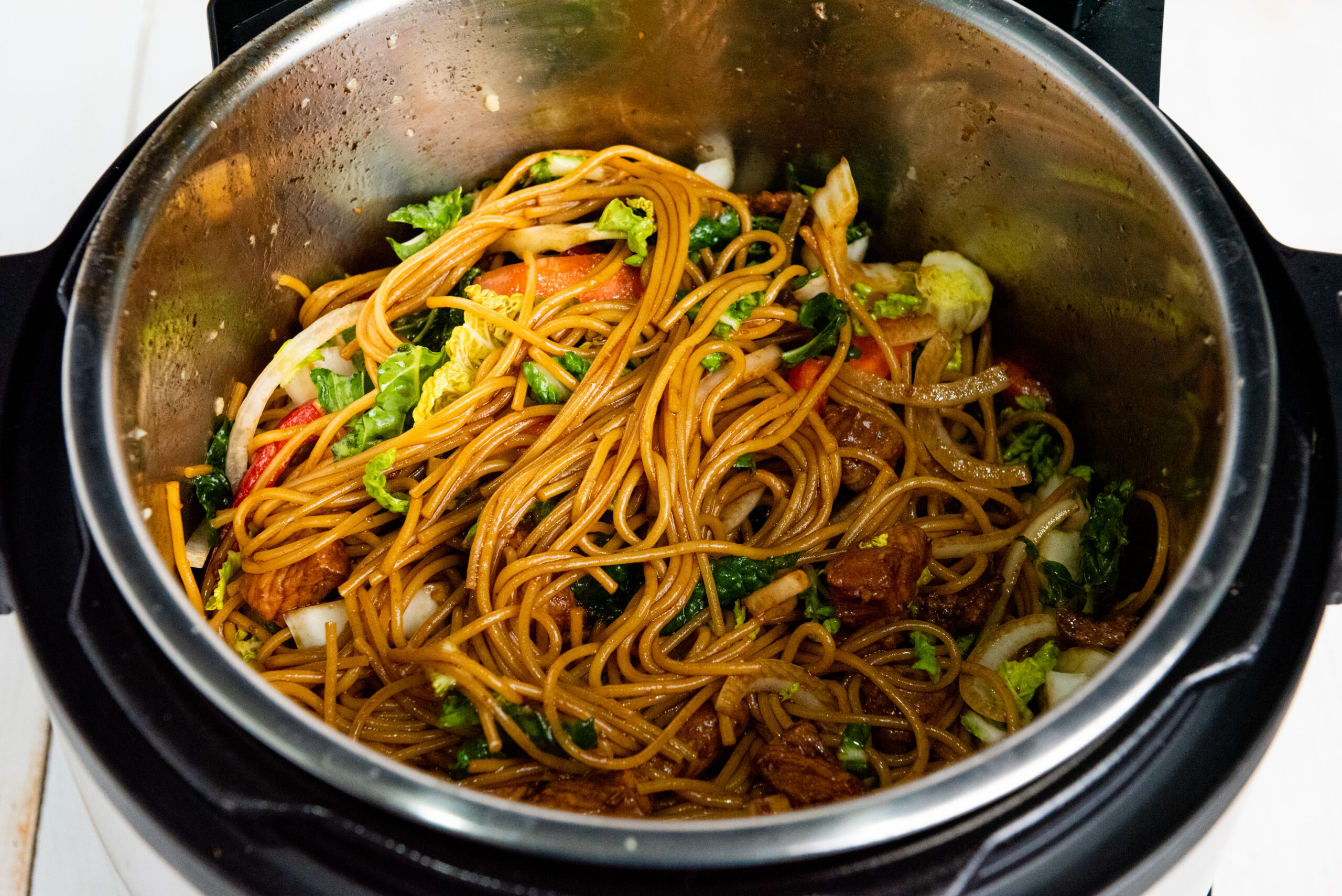
- After those 4 minutes, open the pot and stir the noodles around. Add the remaining dark soy sauce, light soy sauce, hoisin sauce, and mirin to the noodles and stir until combined.
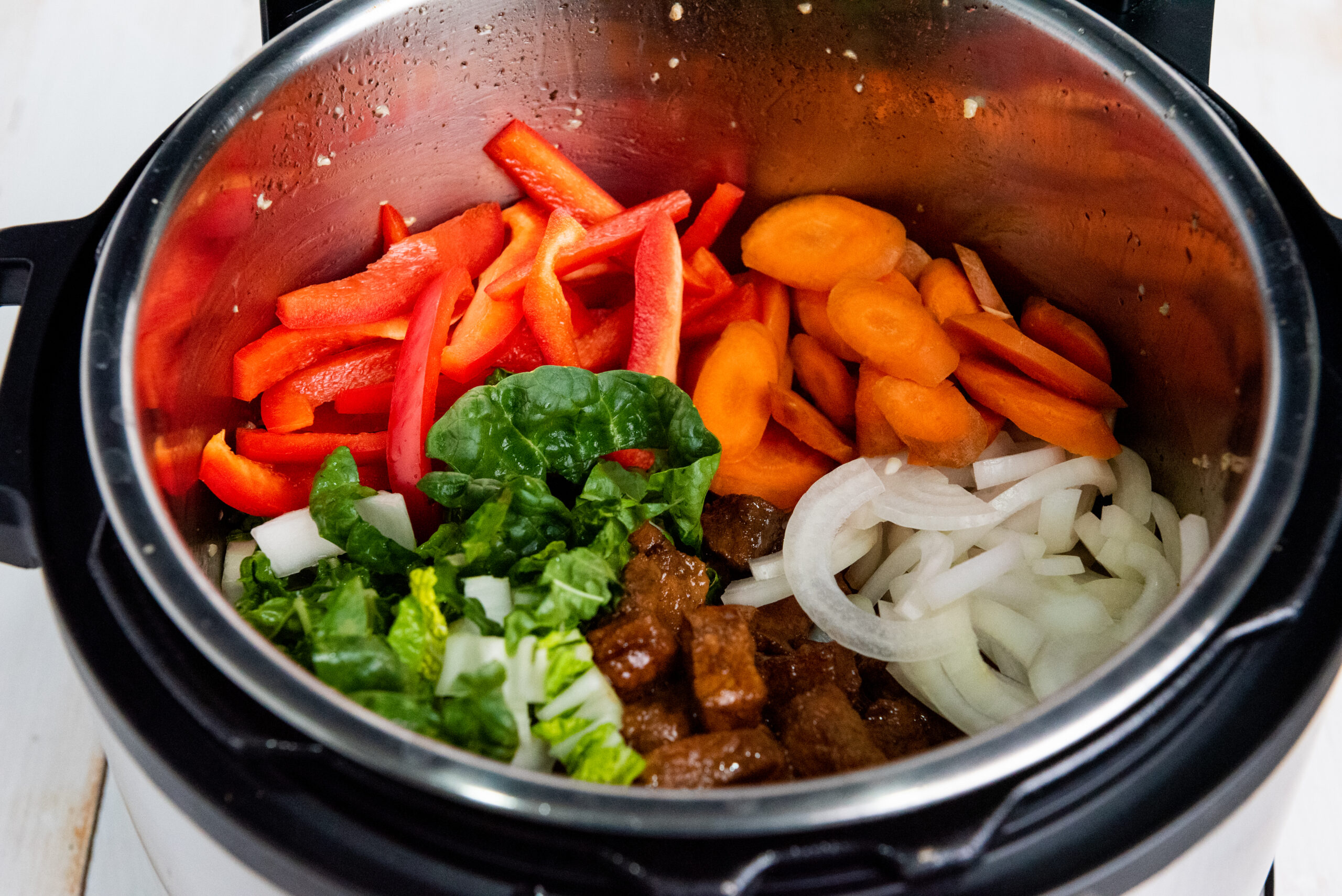
- Then, turn the sauté on high and add the sliced Bok choy, red bell pepper, onions, carrots, and pork to the pot. Stir often for about 5-8 minutes. (Depending on how crispy you like your vegetables.
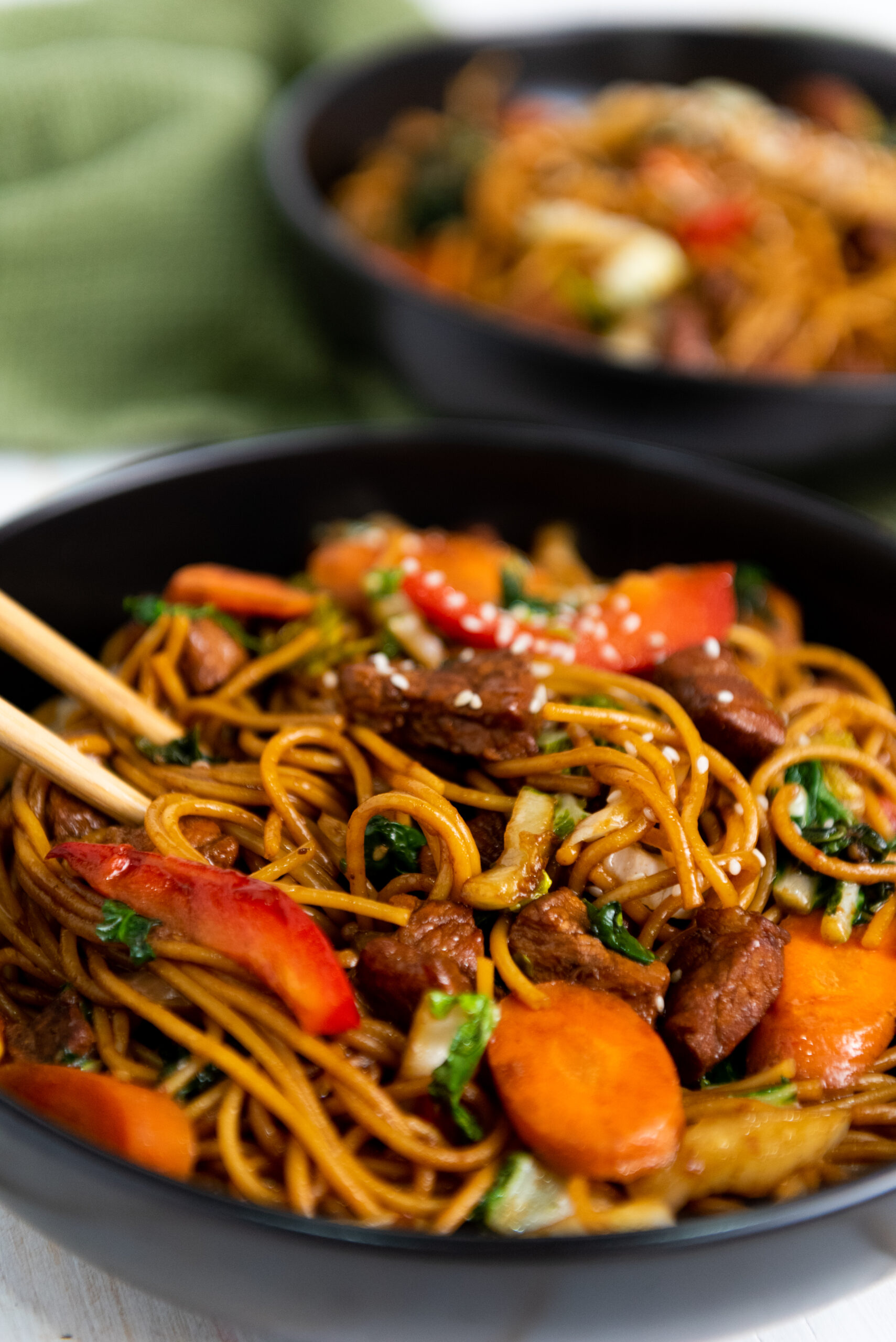
- Garnish with sesame seeds, and season to your liking.
- Enjoy while hot!
Instant Pot Pork Lo Mein
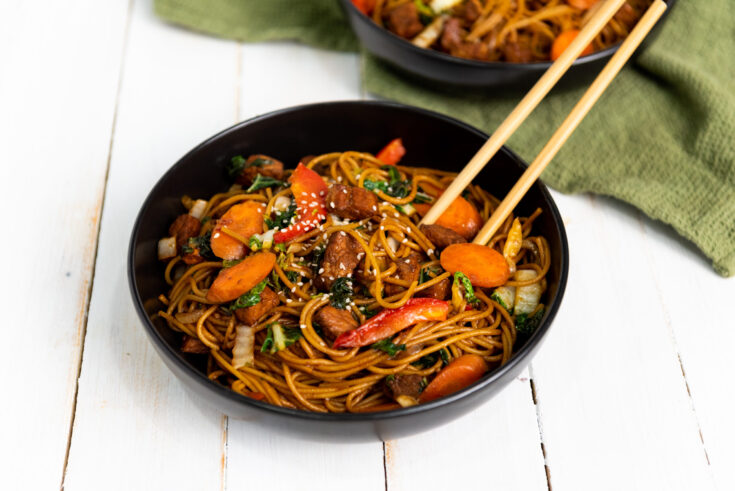
Ingredients
- 8 Oz spaghetti
- 1 lbs. center pork
- 2 cups water
- 1 red Bell pepper
- 1 lbs. baby Bok choy
- 2 small carrots
- 1 yellow onion
- 4 cloves of garlic
- 3 tbsp dark soy sauce
- 2 tbsp Light soy sauce
- 1 tbsp hoisin sauce
- 1 tbsp Sesame oil
- 1 tbsp Mirin
- Oil of your choice (vegetable oil, canola oil)
- Salt, optional
- Pepper, optional
- Sesame seeds, optional
Instructions
- Start by washing your produce.
- Cut the pork into small dice, marinate with half of the dark soy sauce and sesame oil, and mix until well combined.
- Turn on the Sauté setting on high on the Instant Pot. Add 1 tbsp of your choice and let the oil get hot. Add the pork to the pot and let it sauté until golden brown outside. Remove the meat from the pan and set aside.
- Slice your onions, Bok choy, carrots, and red bell pepper, and mince your garlic. Set aside.
- Add the minced garlic to the instant pot and let it golden brown for about 30 seconds.
- Add the water to the instant pot and deglaze the bottom by cleaning it with a spatula.
- Break the spaghetti in half and lay it down in a crisscross pattern. This will help prevent the noodles from sticking to each other. Do not stir the noodles after you’ve created the pattern. Gently push the spaghetti down so it is under the liquid.
- Close the Instant Pot with the lid, seal the valve, and pressure cook on high for 4 minutes.
- Once the 4 minutes have passed, immediately release the natural pressure release valve and let it rest for another 4 minutes.
- After those 4 minutes, open the pot and stir the noodles around. Add the remaining dark soy sauce, light soy sauce, hoisin sauce, and mirin to the noodles and stir until combined.
- Then, turn the sauté on high and add the sliced Bok choy, red bell pepper, onions, carrots, and pork to the pot. Stir often for about 5-8 minutes. (Depending on how crispy you like your vegetables.
- Garnish with sesame seeds, and season to your liking.
- Enjoy while hot!